

Product Usage
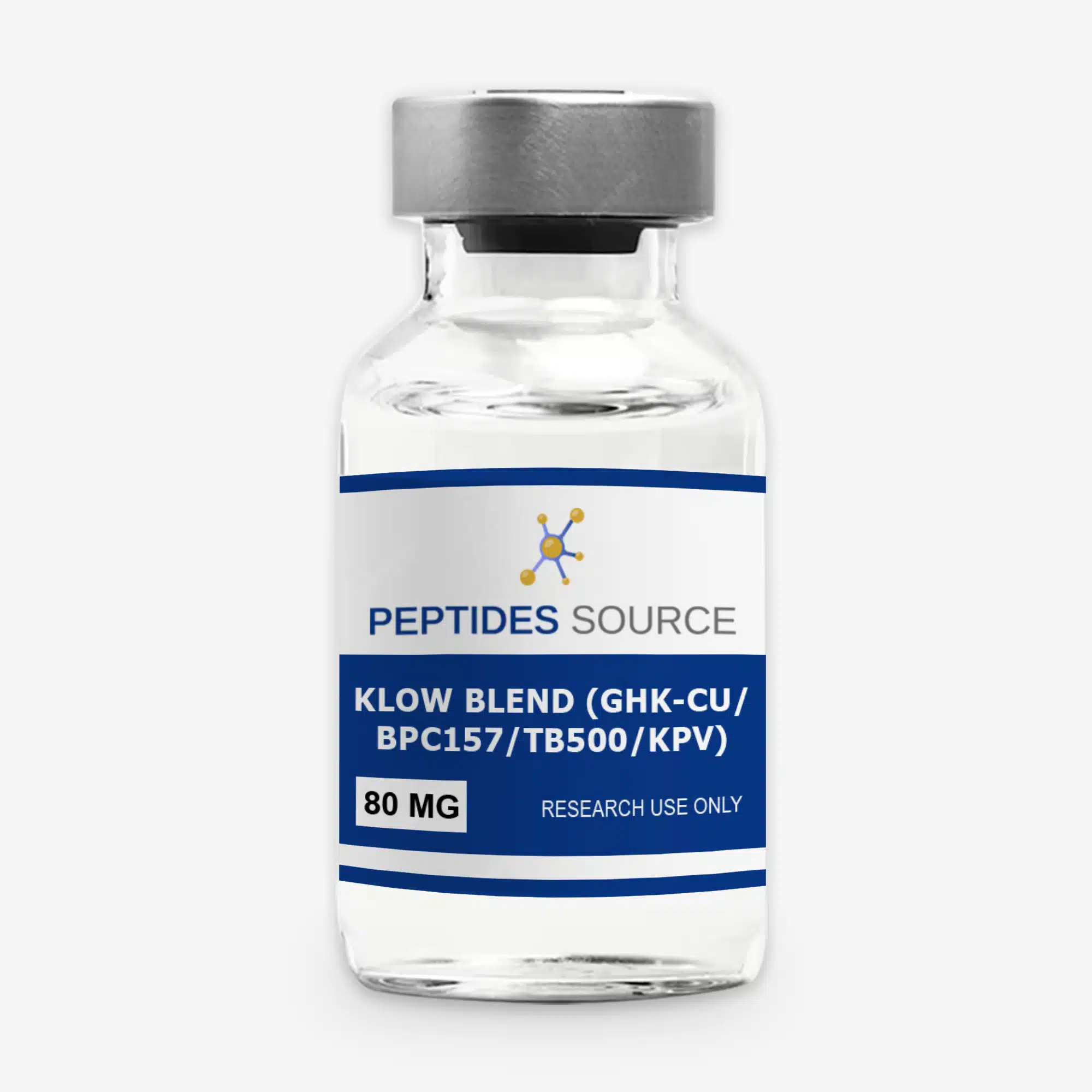
Klow Blend (GHK-CU/BPC157/TB500/KPV) IS INTENDED AS A RESEARCH CHEMICAL ONLY. This designation allows the use of research chemicals strictly for in vitro testing and laboratory experimentation only. All product information available on this website is for educational purposes only. Bodily introduction of any kind into humans or animals is strictly forbidden by law. This product should only be handled by licensed, qualified professionals. This product is not a drug, food, or cosmetic and may not be misbranded, misused or mislabled as a drug, food or cosmetic.
Introduction
Klow blend peptide brings together four powerful peptides: GHK-CU, BPC-157, TB-500, and KPV, each with unique benefits, to support healing and regeneration in the body. These peptides work through different pathways but complement each other to enhance their overall effects. BPC-157 is known for its ability to speed up tissue healing, promote the growth of new blood vessels, and protect the stomach and gut lining. It plays a key role in repairing damage and supporting recovery. TB-500, the full version of Thymosin Beta-4, helps cells move and repair themselves by regulating actin, a protein essential for cell movement. This makes it highly effective for wound healing and tissue regeneration. KPV is a small peptide fragment that reduces inflammation and fights harmful bacteria. It works by calming an overactive immune system, which can help the body recover more efficiently. GHK-Cu, a natural copper-binding peptide, boosts collagen production, improves skin and hair health, and supports cellular repair. It’s particularly effective for tissue remodeling and renewal. When combined, these peptides create a powerful synergy. BPC-157 and TB-500 focus on repairing tissues and improving blood flow, while KPV reduces inflammation and fights infections. GHK-Cu enhances tissue rebuilding and renewal. Together, they form a comprehensive blend for studying how the body heals and regenerates.
BPC-157 + TB-500 (Thymosin Beta-4) + KPV + GHK-Cu Blend
This blend combines four well-known peptides—BPC-157, TB-500, GHK-Cu, and KPV—each recognized for their powerful healing and anti-inflammatory properties. These peptides have been extensively studied for their roles in wound healing, tissue regeneration, muscle and tendon repair, and even influencing DNA expression patterns. They are also associated with slowing the aging process, improving both lifespan and overall healthspan. While each peptide is effective on its own, they work through different mechanisms, making them ideal for use together. This combination is designed to create synergistic benefits, amplifying their individual effects on tissue repair and regeneration. The BPC-157 + TB-500 + GHK-Cu + KPV blend simplifies the research process by combining these peptides into a single formula. This makes ordering, storing, dosing, and administering them more convenient, allowing researchers to focus on studying their combined healing properties and designing experiments, rather than managing multiple individual peptides.
BPC-157: Biochemistry
BPC-157 is a lab-made peptide made of 15 amino acids, based on a natural compound in the body called Body Protective Compound (BPC), which was first found in human stomach juice. It has strong anti-inflammatory and healing properties and helps repair tissues in many parts of the body, like the stomach, liver, muscles, tendons, heart, brain, and nerves. Scientists are still studying exactly how BPC-157 works, but it seems to either attach to cell receptors or enter cells to affect genes—or maybe both. One key way it works is by improving nitric oxide (NO) signaling, which is important for healing and growing blood vessels. BPC-157 helps activate enzymes like eNOS that boost NO production, which speeds up tissue repair. After being taken, BPC-157 spreads quickly through the body, reaching organs like the kidneys, liver, and spleen within 10 minutes and peaking in about an hour. It also changes the activity of certain genes that control blood vessels, immune responses, and inflammation, helping the body heal faster. These effects are carefully regulated and depend on how long the peptide stays in the body. Overall, BPC-157 is a powerful tool for healing and regeneration, with the ability to reduce inflammation, repair tissues, and support recovery from injuries and other conditions.
TB-500: Biochemistry
TB500 is a synthetic peptide based on thymosin beta-4 (TB-4), a natural protein in the body known for its ability to reduce inflammation and repair tissues. Like TB-4, TB500 binds to a protein called actin and helps regulate genes. It has many benefits, including improving heart health, muscle repair, immune function, and even promoting hair growth and reducing signs of aging. TB500 works in two main ways. First, it binds to actin inside cells, which helps cells move, grow, and divide. This improves wound healing, reduces inflammation, helps immune cells reach damaged areas, and supports the growth of new blood vessels. Second, it influences gene activity, helping to control inflammation and promote tissue repair. It reduces harmful molecules like TNF-α and activates pathways that repair tissues and reduce scarring. TB500 also affects Wnt signaling, which helps grow hair by promoting hair follicle formation at the DNA level. Overall, TB500 is a powerful peptide with wide-ranging effects that support healing, reduce inflammation, and even promote hair growth.
GHK-Cu: Biochemistry
GHK-Cu is a natural compound made of a small protein (GHK) attached to copper. It was first found in human blood but is also present in saliva and urine. Studies in animals show that GHK-Cu is important for healing wounds and reducing inflammation. It is especially good at boosting collagen production and helping skin cells (fibroblasts) grow, which is why it’s often used in anti-aging skincare products. GHK-Cu works by controlling enzymes that repair tissues. It increases enzymes that break down damaged proteins while protecting healthy proteins from being destroyed. This balance helps the body heal wounds, especially in the skin and connective tissues. It also reduces inflammation by calming harmful molecules and improving immune responses. Additionally, GHK-Cu boosts antioxidants like superoxide dismutase and glutathione, which protect cells and reduce tissue damage.
KPV: Biochemistry
KPV is a tiny peptide made of just three amino acids, but it has many powerful effects. It comes from a larger molecule called alpha-melanocyte-stimulating hormone (α-MSH) and is known for its strong anti-inflammatory properties. KPV helps reduce inflammation in the gut, lungs, brain, and other areas, and it can even be taken by mouth, which is rare for peptides. While it can bind to certain receptors, KPV mostly works through other pathways, and scientists are still studying exactly how it helps with wound healing and inflammation. Since it was first studied in 1984, KPV has been shown to reduce many inflammatory conditions, like arthritis, gastritis, and brain inflammation. It works by calming harmful molecules, reducing inflammatory cells, and boosting antioxidants. KPV is also special because it mainly targets areas with too much inflammation, leaving healthy tissues and normal immune responses alone. This makes it safe and easy to use, with little risk of side effects. Research shows that KPV can also reduce scarring during wound healing, making tissues stronger and more functional. This is especially helpful for heart and connective tissue repairs and even for reducing scarring caused by chemotherapy, leading to better treatment outcomes.
BPC-157 + TB-500 (Thymosin Beta 4) + KPV + GHK-Cu Blend: Anti-Inflammatory Effects
BPC-157, TB500, GHK-Cu, and KPV are powerful peptides that work together to control inflammation and promote healing. Inflammation, when not properly managed, can cause pain, tissue damage, and long-term health problems. BPC-157 and KPV are especially strong at reducing inflammation. BPC-157 helps balance the body’s immune response and has been shown to nearly eliminate inflammation in tough conditions like chronic bladder issues. It also regulates nitric oxide (NO), which is important for blood flow, immune function, and tissue repair. KPV reduces inflammation by controlling how cells respond, helping tissues heal in an organized way and reducing scarring. It also lowers levels of harmful molecules like TNF-α and IL-8, which are linked to conditions like asthma, obesity, and even mental health disorders. TB500 reduces inflammation by blocking cytokines like TNF-α and interleukin-6, which are key drivers of inflammation in autoimmune diseases like arthritis and psoriasis. GHK-Cu complements these peptides by neutralizing harmful free radicals and supporting NO pathways, preventing tissue damage while promoting healing. It also reduces inflammation and helps TB500 focus more on tissue repair and blood vessel growth. Together, these peptides target inflammation from different angles, making them more effective at lower doses and reducing the risk of side effects. By speeding up the healing process, this combination not only controls inflammation but also shortens recovery time, helping the body heal faster and more efficiently.
BPC-157 + TB-500 (Thymosin Beta 4) + KPV + GHK-Cu Blend: Tissue Repair
Tissue repair covers everything from small cuts to serious injuries like muscle tears and tendon damage. The peptides BPC-157, TB500, GHK-Cu, and KPV are powerful healing agents that help repair tissues throughout the body. When used together, they can speed up recovery from injuries and even surgeries. BPC-157 is especially effective, helping at every stage of healing, from the initial injury to rebuilding stronger tissue. It can reduce recovery time by up to 80% and works by increasing growth hormone (GH) receptors on fibroblasts, the cells responsible for tissue repair. This allows the body to use its natural GH more effectively without the risks of taking extra GH, like abnormal bone growth. TB500 works alongside BPC-157 by boosting collagen production, which is essential for building the structure that supports new blood vessels and tissue. It also activates muscle stem cells to help repair muscle and connective tissue. GHK-Cu adds another layer of support by reducing harmful free radicals that can damage cells during healing. This helps prevent scarring and keeps inflammation under control. Finally, KPV plays a key role by reducing excessive inflammation that can lead to scarring while still allowing the necessary healing processes to continue. Together, these peptides create a balanced and efficient healing process, leading to stronger, healthier tissue with less scarring and faster recovery. BPC-157 + TB-500 (Thymosin Beta 4) + KPV + GHK-Cu Blend: Anti-Bacterial Properties These peptides not only help with healing but also fight bacteria and fungi, which is important for preventing infections and ensuring smooth recovery. TB500 has strong antibacterial and antifungal effects and helps antibiotics work better by improving their ability to reach the injured area. GHK-Cu fights infections in a unique way by forming a powerful antimicrobial complex with fatty acids from damaged tissue, reducing wound infections by up to 27%. KPV also has antimicrobial properties, especially against harmful pathogens like Staphylococcus aureus and Candida albicans. It boosts immune cells, like neutrophils, to fight infections more effectively. While BPC-157 doesn’t directly kill bacteria or fungi, it supports the immune system by improving blood flow to the wound. This helps immune cells reach the area and removes debris that could lead to infections. Together, these peptides create a strong defense against infections, helping wounds heal faster and without complications.
BPC-157 + TB-500 (Thymosin Beta 4) + KPV + GHK-Cu Blend: Anti-Aging Effects
The peptides BPC-157, TB500, GHK-Cu, and KPV are powerful tools for promoting healing and reducing inflammation, and they also have impressive anti-aging benefits. As we age, our body’s ability to repair itself slows down, leading to longer recovery times, more inflammation, and a higher risk of diseases like heart problems and neurodegenerative disorders. These peptides work together to improve tissue repair and reduce the harmful effects of aging by supporting the body’s natural healing processes. TB500 is especially promising for regenerative medicine. It helps repair tissues in organs like the heart and brain, which have very limited ability to heal on their own. For example, TB500 can improve heart function after a heart attack by activating special cells that help repair heart tissue. It also reduces inflammation and protects cells from damage, which is important in conditions like sepsis. Beyond the heart, TB500 has been shown to help heal eye injuries, chronic wounds, and muscle damage, making it a versatile and safe option for tissue repair. BPC-157 is another powerful peptide that supports healing throughout the body. It improves blood flow, reduces blood pressure, and prevents blood clots, which are all important for heart health. It also helps protect tissues from damage and speeds up recovery in areas like the brain, muscles, bones, and digestive system. BPC-157 works well with TB500 by preventing further damage while TB500 focuses on repairing the tissue, creating a strong combination for recovery. GHK-Cu is unique because it influences a large number of genes, turning on those that promote healing and turning off those that cause inflammation and tissue damage. It also reduces oxidative stress, which can harm cells, and helps clear toxic byproducts linked to diseases like diabetes and Alzheimer’s. GHK-Cu even helps regulate copper levels in the brain, which may prevent the buildup of harmful proteins associated with Alzheimer’s. While it may not reverse existing damage, it shows promise as a preventative treatment for neurodegenerative diseases. KPV plays an important role in reducing inflammation, especially in the lungs. Healthy lungs are essential for oxygenating the blood and regulating blood pressure. KPV helps prevent scarring in the lungs, which supports heart and blood vessel health by keeping arteries flexible and reducing stiffness. This makes KPV a valuable anti-aging peptide that indirectly improves overall cardiovascular health. When combined, these peptides create a powerful synergy, working together to enhance healing, reduce inflammation, and protect against the effects of aging. This combination could not only help people live longer but also improve their quality of life by keeping their bodies healthier and more resilient as they age.
BPC-157 + TB-500 (Thymosin Beta 4) + KPV + GHK-Cu Blend: Summary
BPC-157, TB500, GHK-Cu, and KPV are incredibly powerful peptides with many benefits, especially for healing tissues, reducing inflammation, and protecting the body from various health problems. These problems can range from sudden events like heart attacks and strokes to long-term conditions like infections and diseases that affect the brain. Each peptide has unique abilities, and learning more about them individually can help us understand just how effective they are. While a lot of research has been done on these peptides separately, their combined effects are still being explored. Early studies suggest that using them together could make their benefits even stronger, creating a powerful combination for healing and health. This is especially exciting when it comes to aging. Aging happens because our cells repair themselves less effectively, inflammation increases, and the body becomes less able to handle stress and injuries. These peptides target different parts of the aging process, offering a way to slow down or even reverse some of these changes. What makes these peptides so exciting is their potential to improve not just how long we live but how healthy and active we stay as we age. They could help heal injuries, fight diseases, and boost overall energy and resilience, allowing people to enjoy a better quality of life for longer. For scientists and doctors, these peptides open up new possibilities for research and treatment. By studying how they work together—how they regulate genes, reduce inflammation, and repair tissues—we could discover groundbreaking ways to treat injuries, prevent chronic diseases, and slow down aging. The future of medicine may lie in using these powerful combinations to improve health at the molecular level, helping people stay strong, healthy, and active well into old age.
References
- Sikiric P, et al. “BPC 157 and healing.” Current Pharmaceutical Design. 2018;24(18):1982–2001.
- Chang CH, et al. “Pentadecapeptide BPC 157 accelerates healing of the colon and skin in rats.” Journal of Physiology (Paris). 2011;105(3–4):144–150.
- Vukojevic J, et al. “Stable gastric pentadecapeptide BPC 157: NO-system relation.” Current Pharmaceutical Design. 2014;20(7):1126–1135.
- Staresinic M, et al. “The effect of BPC 157 on blood vessels and angiogenesis.” Journal of Physiology (Paris). 2003;97(1):69–76.
- Seiwerth S, et al. “BPC 157—The healing peptide: Biological and clinical potentials.” Vitamins & Hormones. 2018;108:187–212.
- Goldstein AL, Hannappel E. “Thymosin β4: A multifunctional regenerative peptide.” Basic & Clinical Pharmacology & Toxicology. 2013;113(4):214–220.
- Sosne G, et al. “Thymosin β4 promotes wound healing and tissue repair.” Annals of the New York Academy of Sciences. 2010;1194:190–198.
- Malinda KM, et al. “Thymosin β4 accelerates wound healing.” Journal of Investigative Dermatology. 1999;113(3):364–368.
- Philp D, et al. “Thymosin β4 increases hair growth by activation of hair follicle stem cells.” FASEB Journal. 2018;32(2):11540.
- Badamchian M, et al. “Thymosin beta 4 reduces inflammation and promotes cardiac repair.” Journal of Molecular and Cellular Cardiology. 2003;35(1):69–74.
- Pickart L, et al. “The human tri-peptide GHK and tissue remodeling.” Journal of Biomaterials Science, Polymer Edition. 2008;19(8):969–988.
- Siméon A, et al. “Copper‐GHK complex stimulates skin wound healing and angiogenesis.” Wound Repair and Regeneration. 1999;7(1):29–40.
- Maquart FX, et al. “Stimulation of collagen synthesis by the tripeptide–copper complex.” FEBS Letters. 1988;238(2):343–346.
- Pickart L, et al. “GHK-Cu regulates expression of multiple human genes associated with inflammation, antioxidant activity and healing.” Biochemistry Insights. 2012;2012:1–13.
- Arul V, et al. “GHK-Cu improves wound healing in diabetic rats.” Life Sciences. 2007;80(2):111–118.
- Getting SJ, et al. “Melanocortins and anti-inflammatory mechanisms.” Pharmacology & Therapeutics. 2006;111(1):1–22.
- Luger TA, et al. “Anti-inflammatory effects of α-MSH and its derivatives including KPV.” Annals of the New York Academy of Sciences. 2006;994:133–142.
- Catania A, et al. “The melanocortin system in inflammation.” Pharmacological Reviews. 2004;56(1):1–29.
- Lipton JM, et al. “Anti-inflammatory effects of the tripeptide KPV in experimental models.” Peptides. 1994;15(4):761–764.
- Getting SJ, et al. “The melanocortin peptide KPV reduces inflammation and tissue damage.” Journal of Immunology. 1999;163(6):3363–3368.
- Chhabra A, et al. “Actin regulation in cell motility and wound healing.” Nature Reviews Molecular Cell Biology. 2014;15(3):140–152.
- Das M, et al. “Nitric oxide and wound healing.” Journal of Pharmacy and Pharmacology. 2015;67(5):617–625.
- Rittie L. “Cellular mechanisms of skin wound repair.” Advances in Wound Care. 2016;5(5):230–246.
- Wynn TA, et al. “Inflammation and fibrosis.” Nature Medicine. 2012;18(7):1028–1040.
- Sen CK. “Wound healing essentials: Let there be oxygen.” Wound Repair and Regeneration. 2009;17(1):1–18.
- Stevens EJ, et al. “Antimicrobial peptides and wound healing.” Infection and Immunity. 2013;81(4):1359–1369.
- Jung CJ, et al. “Antibacterial effects of copper peptides in wound treatments.” BioMetals. 2011;24(6):943–951.
- Yeung ATY, et al. “Multipronged immunomodulatory strategies of antimicrobial peptides.” Future Microbiology. 2011;6(12):1907–1922.
- Hancock REW, “Host defense peptides and their immunomodulatory effects.” Nature Reviews Immunology. 2016;16(5):321–334.
- Reithofer MR, et al. “Peptide–metal complexes as antimicrobial agents.” Chemical Reviews. 2015;115(9):5214–5260.
- López-Otín C, et al. “The hallmarks of aging.” Cell. 2013;153(6):1194–1217.
- Harman D. “Free radical theory of aging.” Journal of Gerontology. 1956;11(3):298–300.
- Kirkwood TBL. “Understanding the science of aging.” Nature. 2008;454(7208):591–597.
- Kennedy BK, et al. “Geroscience: Linking aging to chronic disease.” Cell. 2014;159(4):709–713.
Campisi J. “Cellular senescence and inflammation in aging.” Annual Review of Physiology. 2013;75:685–705.
Related products

Vials
Vials

Vials

Vials
Vials

Vials

Vials

Vials